Category: Technology

  • Flanders Technology Tour by Nexxworks

    Flanders Technology Tour by Nexxworks

    Innovation in Action — My Journey Across 3 Days

    Last week I joined the Flanders Technology Tour by Nexxworks: three dense days of ports, hospitals, airports, startups and a bus full of people who never stopped exchanging ideas.

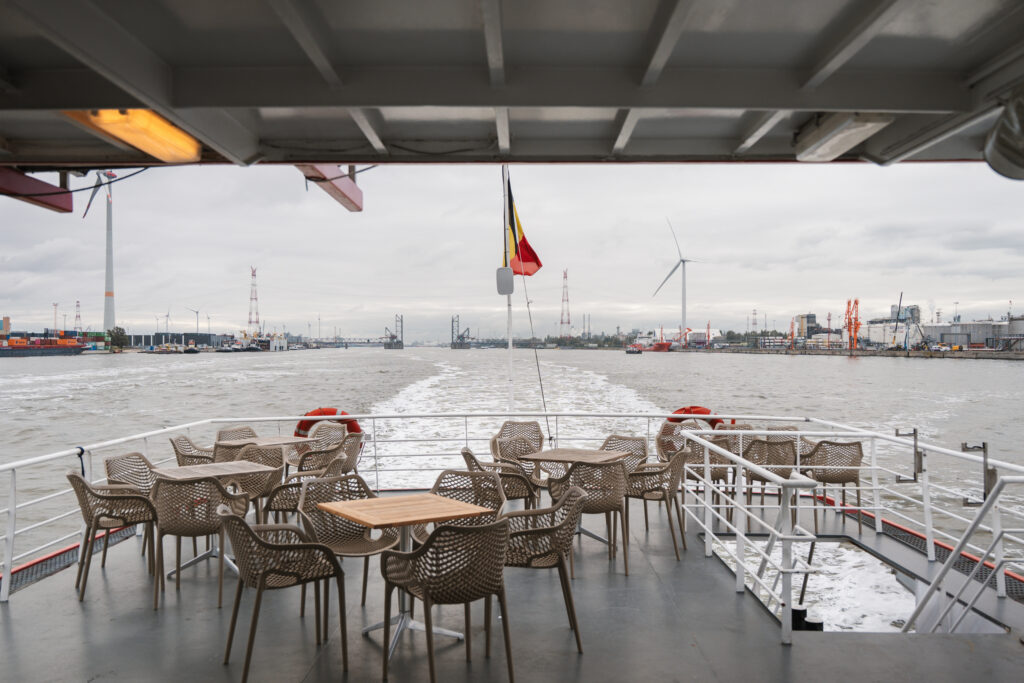
    We started with a Polestar pickup at dawn, glided over the Scheldt on a boat tour of the Port of Antwerp-Bruges, stared at robot-assisted surgery in Ghent, and fries (of course) at Agristo.

    What made it unforgettable wasn’t just the itinerary; it was the people. Even a 1.5‑hour bus ride from Boom to Zaventem turned into a seminar on wheels where learning did not pause.

    The red thread across the tour: Innovation = invention + implementation.

    Ideas are abundant; doing is scarce.

    The best places we visited are building safe harbours for experimentation, investing in adoption, and collaborating across ecosystems.

    Because the cost of doing things is going down, while the cost of doing nothing keeps going up.
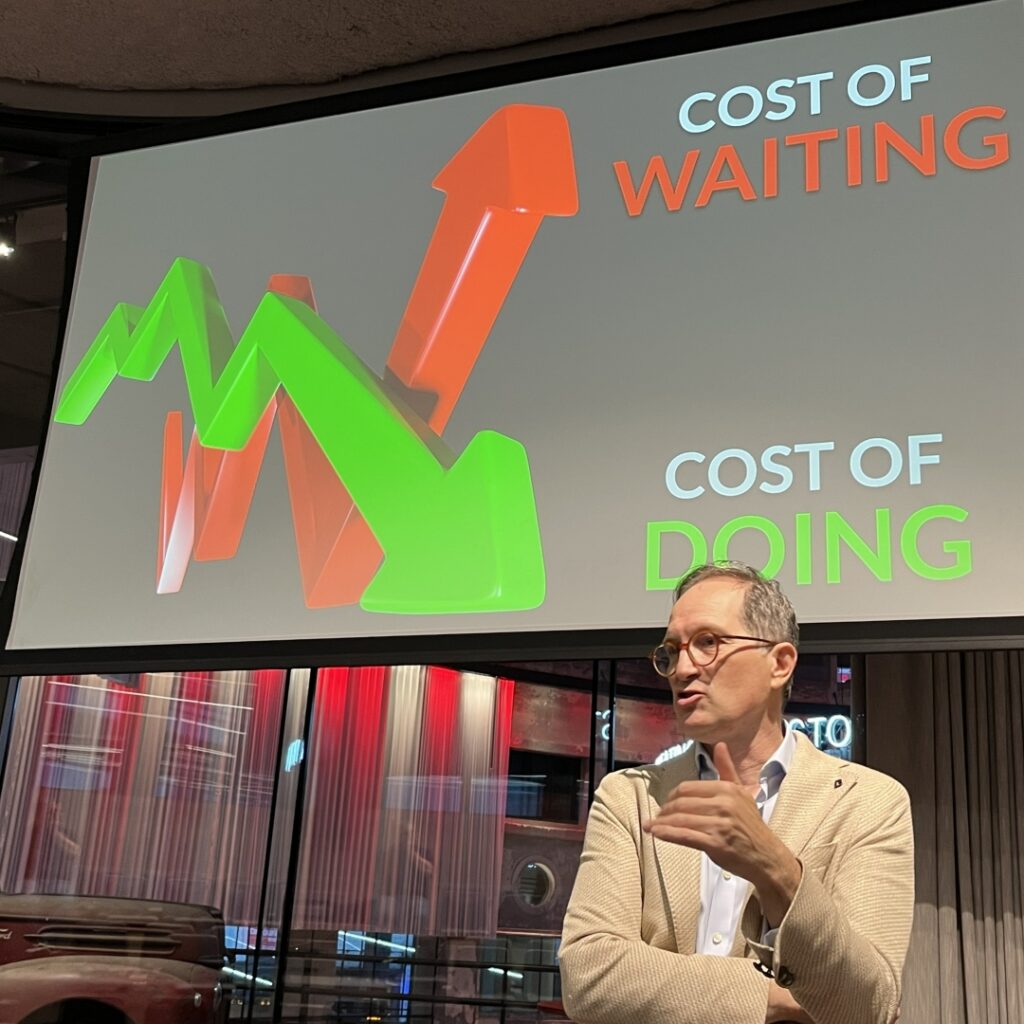
    The cost of doing goes down. The cost of not doing goes up.
    “The cost of doing things is going down, while the cost of doing nothing keeps going up” — Peter Hinssen

    Day 1 – Antwerp: From digital harbours to human connection

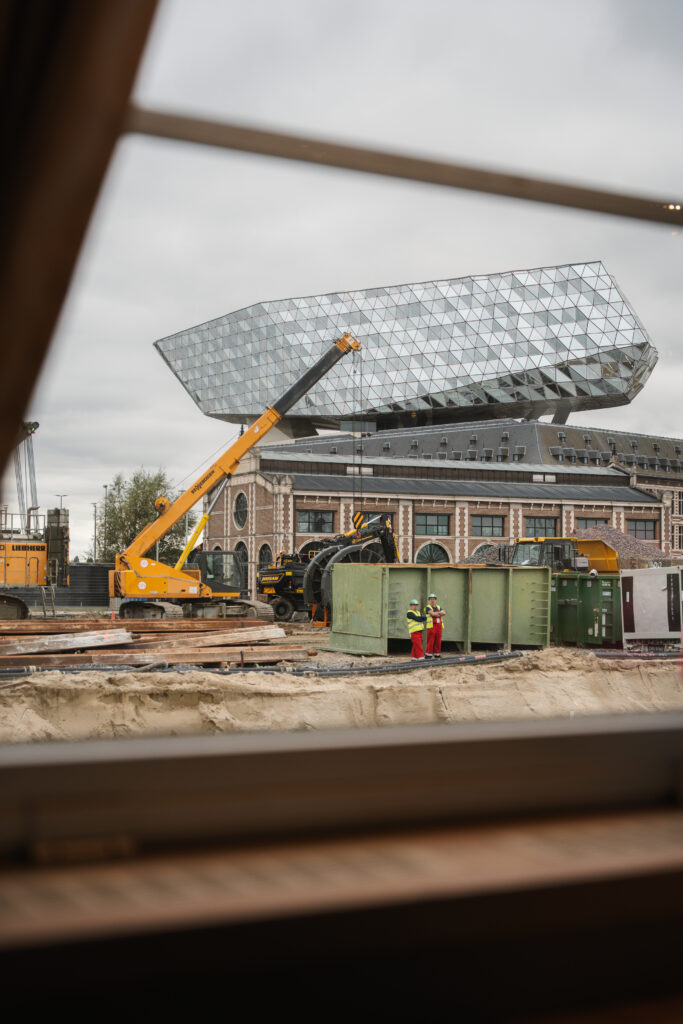
    Breakfast at the Port of Antwerp-Bruges set the tone, then a boat tour guided by Erwin Verstraelen translated “digital transformation” into actual drones, sensors and 5G infrastructure. Later, a brisk digestive walk to Golazo Energy, a stop at ZAS Cadix, and an eye‑opening session with Byteflies. We closed with a dinner-with-a-cause at Samenloop.

    What we heard
    “We live in a world of seismic shocks and undercurrents. Change isn’t a luxury anymore, it’s a necessity.” — Tom Braekeleirs

    Talk the Walk… share your learnings generously, open your parachute, immerse yourself in different realities, and learn.” — Francoise Chombar

    “The worst thing you can say is: we tried it once, it didn’t work.” — Erwin Verstraelen

    Time is finite — but energy is expandable.” and “Success isn’t about doing more. It’s about being more.” — Robin Decottignies, Golazo Energy

    My take on the day

    Antwerp reminded me that implementation beats intention.

    • The port teams push proof of value, not just POCs;
    • ZAS frees up capacity to innovate continuously;
    • Byteflies connects the dots across care settings.

    If you want impact, create safe havens for experimentation and kill the innovation killers in your head.

    Day 2 – Brussels: Ecosystems, AI… and a concert hall that “gives a f*ck”

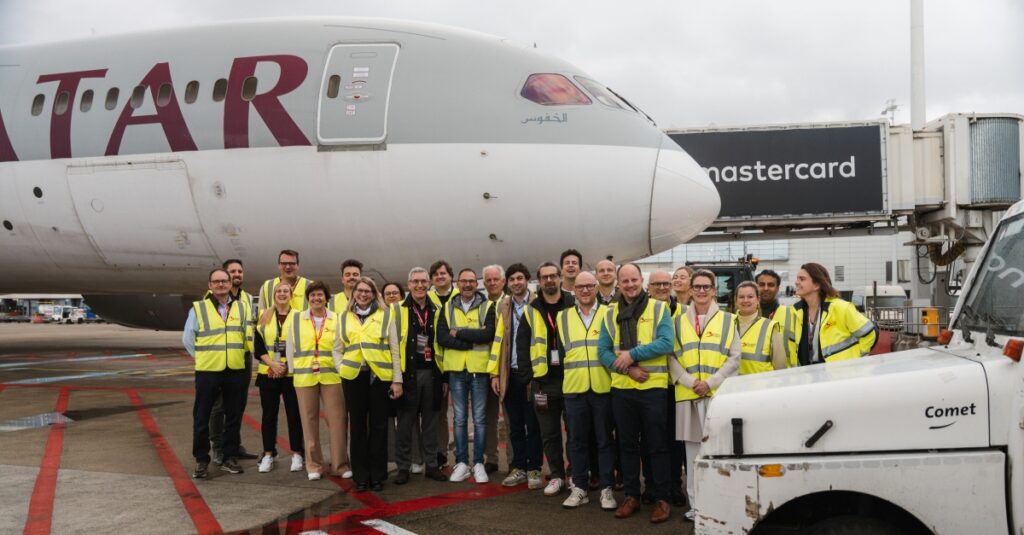
    We kicked off with AI at Mediahuis (their newsroom and concrete use cases), walked into Tomorrowland’s Lab of Tomorrow where entertainment meets deep tech, then went airside at Brussels Airport to see the choreography of people, sensors and systems. We ended on the rooftop at Ancienne Belgique (AB)—a cultural engine that really does give a f*ck about values, inclusion and sustainability.

    Mediahuis is scaling AI with scenario thinking, a full‑time POC team, and AI literacy for 5,000 employees—because scaling four steaks is easy; doing a thousand is a different operating model. (Great metaphor; painful truth.)

    What we heard
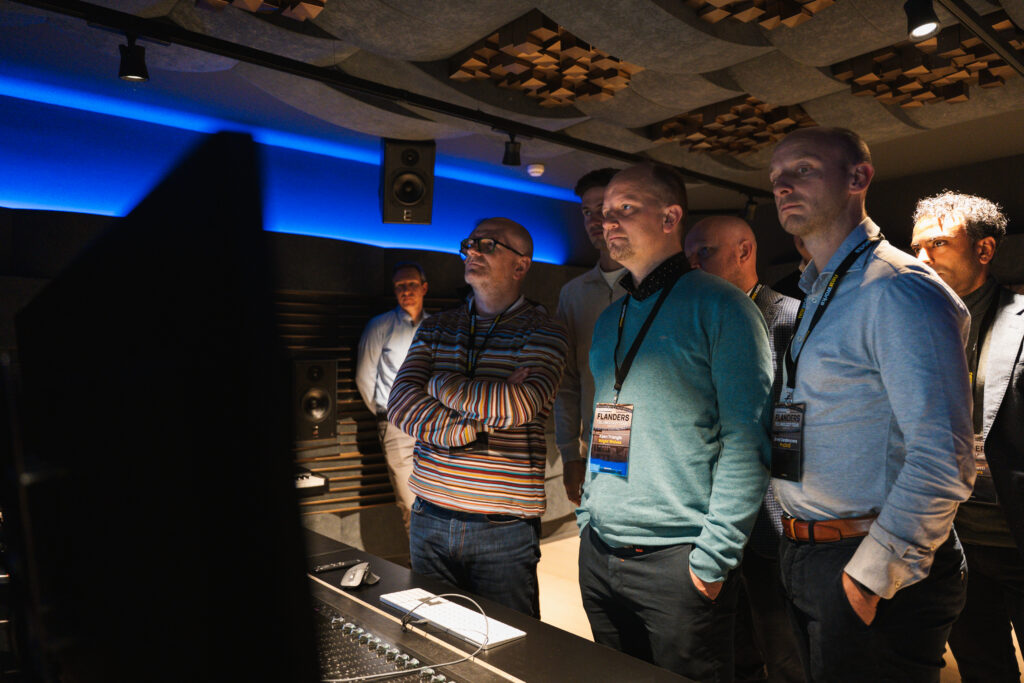
    Lab of Tomorrow: startups like Inku (on‑brand AI visuals) and Aerora (drone light shows) embody the value of community and connection over shiny tools.

    Brussels Airport: data as an orchestrator using Jetpack.ai, plus a tender‑evaluation tool that speeds up the processes.
    AB’s values—in their own unapologetic words: “We give a f*ck… we act on our ideals, take responsibility, break barriers, inspire others.” And they listen, include, and collaborate. That culture is a platform.

    Hope is the dogged determination to do what is in our power to create a better future even when facing bleak challenges and adversity. — Jane Goodall

    My take on the day

    AI is constantly in beta and the biggest leadership challenge of our time.

    • If adoption is an afterthought, you’re just feeding the POC graveyard.
    • Plan to spend 50–70% extra on adoption—change, training, risk management—or don’t start.
    • Also: as AI use rises, so do misinformation & manipulation risks, while critical thinking and social skills can decline.
    • You need literacy + architecture (bottom‑up + top‑down)

    Day 3 – Ghent: Precision, potatoes and the productivity paradox

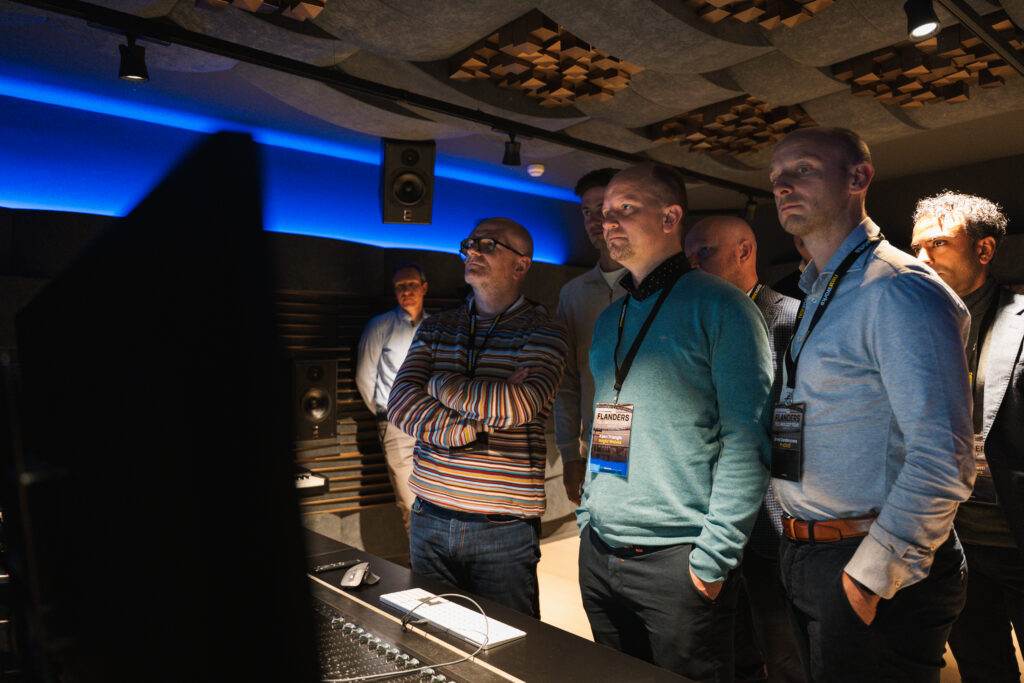
    Ghent is heritage fused with momentum. Orsi Academy was a mind‑blow: robotics augmenting human skill.

    Competency is not that far up the learning curve! But Proficiency is!” — Orsi training insight

    At Agristo, I learned that no AI agent can say “potato” with the passion of Kristof Wallays. And yes, FRIETJEEES.

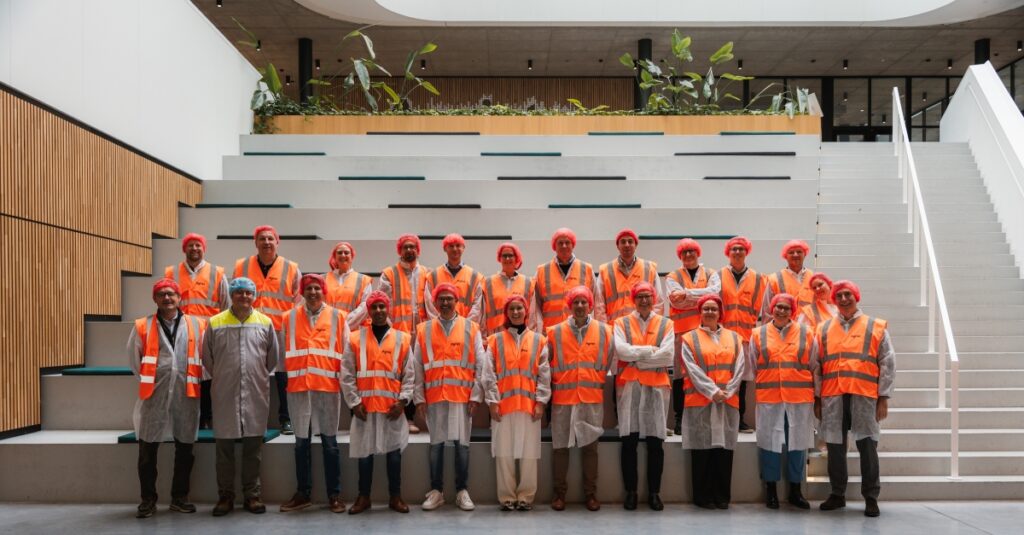
    We finished at Wintercircus: startups, Matthias Geeroms, Miles Ahead (Luc Burgelman)… and a keynote by Peter Hinssen that tied the threads together.

    “It is not a storm—it is the climate.” — Peter Hinssen
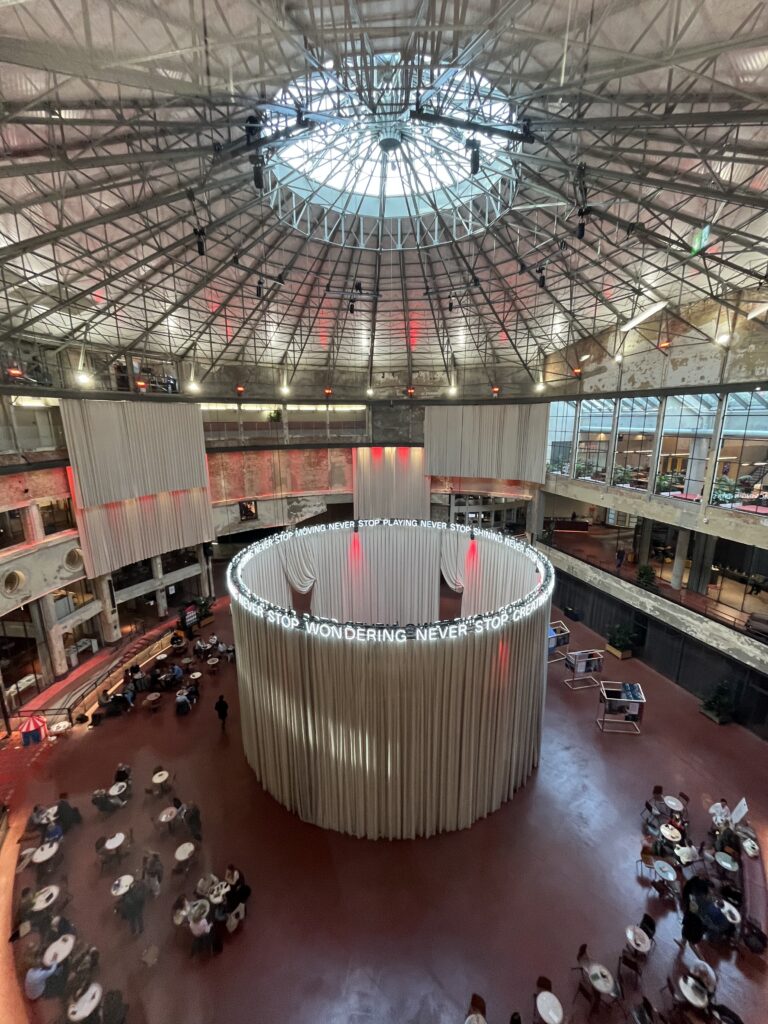
    Agristo’s North Star:Elke aardappel in het zakje krijgen waar hij het meeste waarde oplevert.” (Get every potato into the bag where it yields the most value.)
    My take on the day

    Scale-up truths from the Wintercircus ecosystem

    • Non‑founder sales is the tipping point.
    • When restructuring, cut deep—once.
    • Send your best people abroad to grow.
    • Build a drumbeat (cadence) and a recipe for growth toward Series A.
    • Culture = good leadership: do what you say, hire right, simplify, don’t over‑regulate.
    • Timing, team, model, and funding—all matter, but vision + values sit on top.

    We’re beyond tools: we’re deep in the productivity paradox. Europe risks talking innovation while others ship. If we want to lead, we must remove barriers, fund implementation, and push adoption.

    Concluding

    Four points that won’t leave me:

    1. Innovation = invention + implementation. Most failures are in the second part. Budget, plan, and manage adoption (people, process, risk) upfront.
    2. Ecosystems beat egos. Build safe harbours for experimentation and diversity. Pay it forward; collaborate to innovate & implement.
    3. Entrepreneurship needs a compass (vision & values), a great team, and time & timing. Execution wins.
    4. Leadership over management. Inspire, build resilience, stay agile, anticipate. And Talk the Walk: tell the honest story, both success and failure.

    The cost of doing keeps going down; the cost of not doing keeps climbing. If you’re waiting for the perfect moment, you’ll miss it. Start, learn, adapt. Then tell the story so others can start, too.
    Thanks to the speakers & organization

    • Erwin Verstraelen, Chief Digital & Innovation Officer — Port of Antwerp‑Bruges (digital nervous system)
    • Francoise Chombar & Tom Braekeleirs — moderators (seismic shocks/undercurrents; Talk the Walk)
    • Robin Decottignies, Golazo Energy (energy > time)
    • Jan Witters & Bianca Plak, ZAS Cadix (“innovation is not a project”)
    • Hans De Clercq, Byteflies (“data should travel, not patients”)
    • Mediahuis (AI newsroom/AI literacy program) — Peter Soetens, Jessica Bulthé
    • Lab of Tomorrow / Tomorrowland (Inku, Aerora, Areal)
    • Brussels Airport (ecosystem & AI portfolio)
    • Ancienne Belgique (values & ecosystem platform)
    • Orsi Academy (proficiency‑based training; multimodal AI for the OR) — Pieter De Backer (tour)
    • AgristoKristof Wallays (smart factory & North Star)
    • LighthouseMatthias Geeroms (scale‑up lessons)
    • Miles AheadLuc Burgelman (venture studio principles)
    • Peter Hinssen (closing keynote: climate vs. storm; cost of not doing)

    Continue on LinkedIn

    Innovation, Inspiration & Incredible Connections — My 3day Flanders Technology Tour

    From a boat tour through a “digital harbour” to robot‑assisted surgery and a smart potato factory (FRIETJEEES!), these three days proved that Flanders doesn’t just talk about innovation, it implements it.

    My four takeaways:

    1. Innovation = invention + implementation.
    2. Ecosystems beat egos.
    3. Entrepreneurship needs vision, values, team & timing.
    4. Leaders inspire, build resilience, stay agile, and anticipate.

    Reflections on LinkedIn 👉 link to post

    References

    Nexxworks posts (official)

    And posts from Nathalie Meeuwes, Eline Lostrie, Henri Jacobs, Frank Hamerlinck, Hedvig Horvath and more.

  • The Future of Project Management: Hybrid Approaches and AI Integration

    The Future of Project Management: Hybrid Approaches and AI Integration

    Introduction

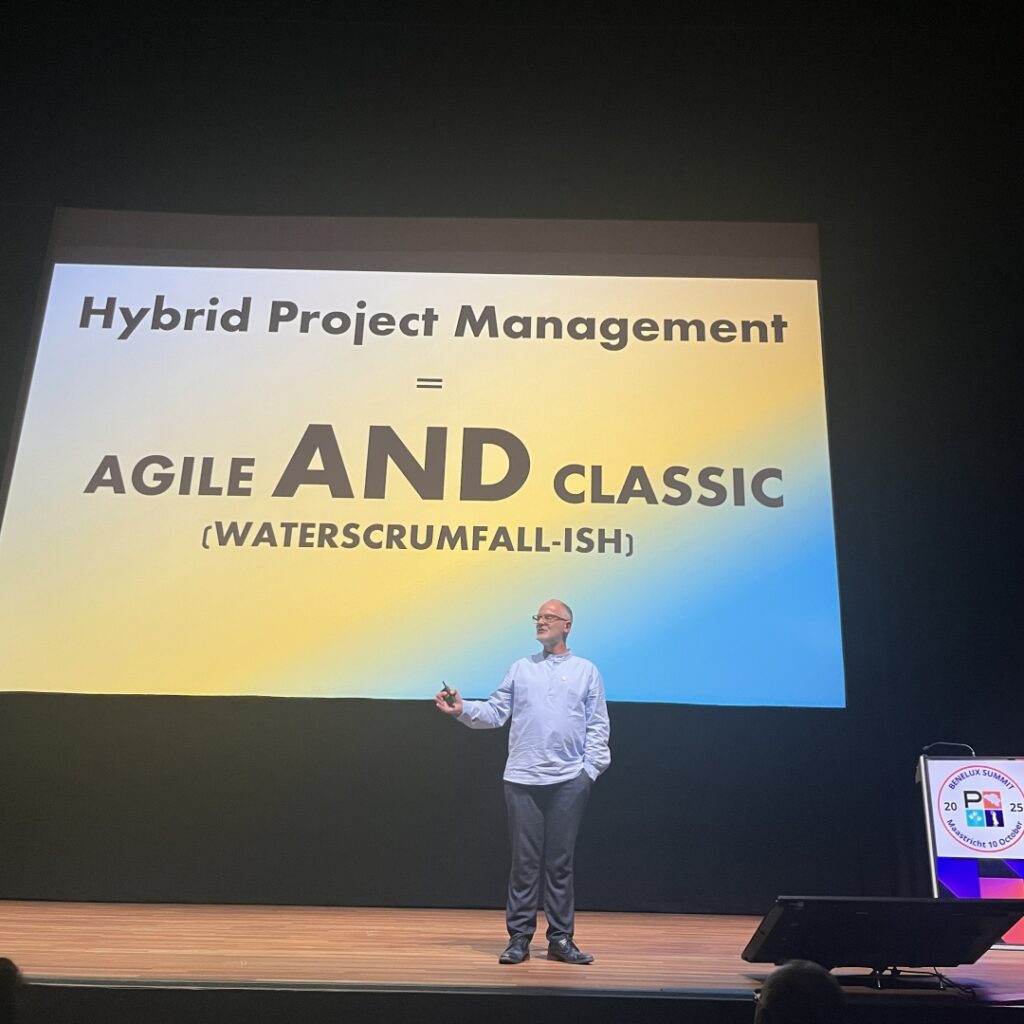
    On October 10, 2025, I joined 400+ project professionals at the PMI BeNeLux Summit in MECC Maastricht. The theme “Project Management in the AI Era: Bridging Precision, Creativity and Innovation” framed a day of keynotes and hallway conversations that all pointing to the same reality: hybrid delivery and AI are transforming how we lead projects and create value.

    Hybrid Project Management: The Best of Both Worlds

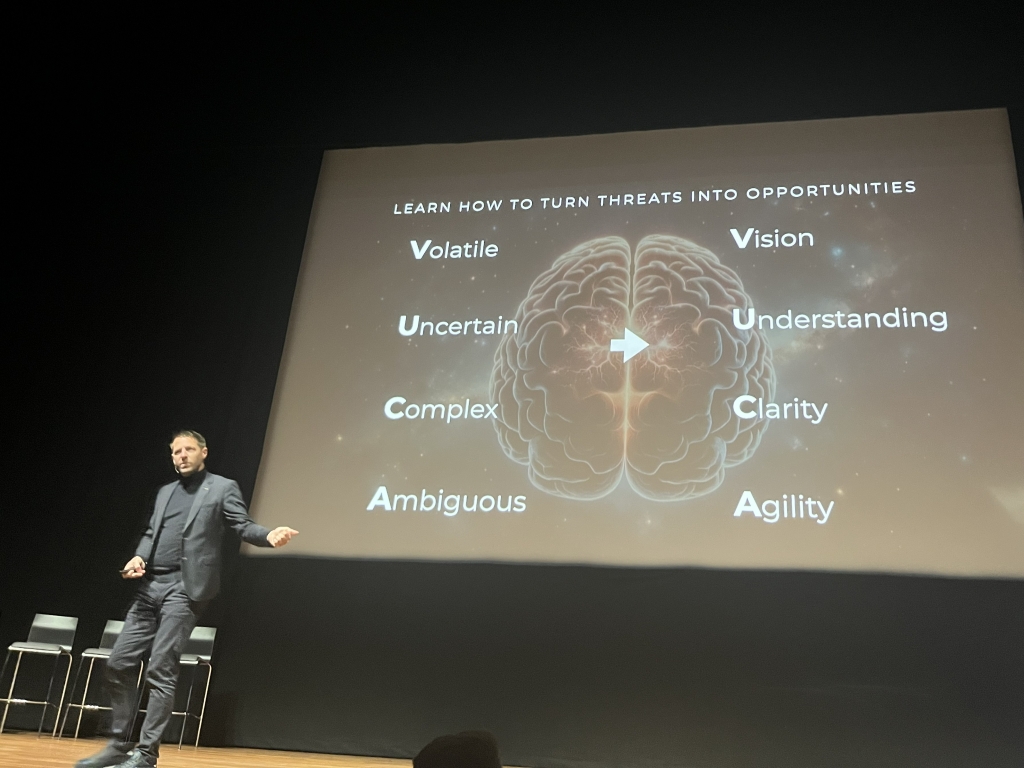
    For years, our debates pitted classic against agile. The more useful question now is where and how to combine them. In his keynote, Bart Briers made a compelling case for a pragmatic hybrid future that blends adaptability with structure. This is exactly what today’s VUCA (Volatility, Uncertainty, Complexity, Ambiguity) and BANI (Brittle, Anxious, Non-linear, Incomprehensible) environment demands: adaptability without losing structure.

    • Know your ecosystem: choose classic, agile, or hybrid by context, not ideology.
    • Simplify to amplify: tailor your ways of working to your organization.
    • Start small, seed champions, scale on early wins, and keep an agile mindset even when a classic methodology is needed.

    AI in Project Management: From Hype to Daily Impact

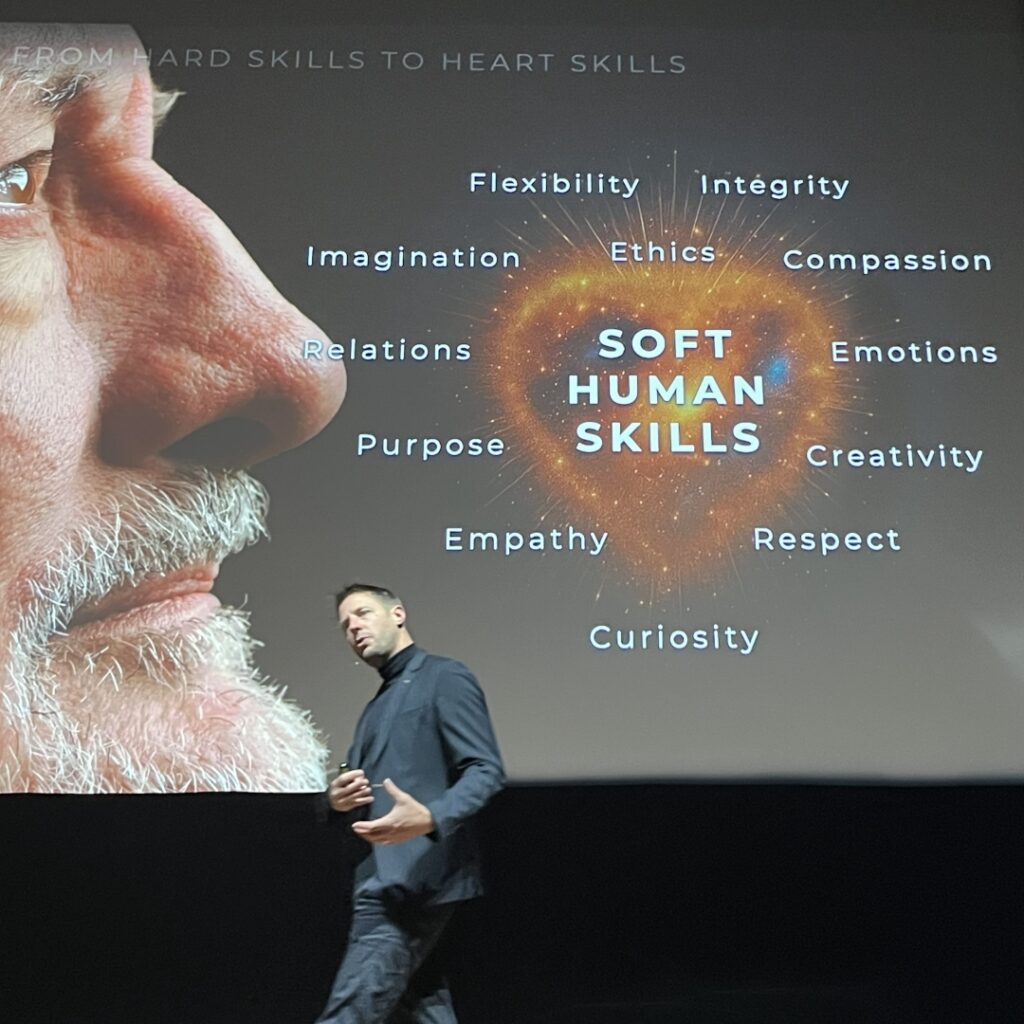
    The keynotes by Christian Kromme and Christina Sejr Pedersen reinforced a core message: AI augments people. It can accelerate execution and sharpen decisions, but the human side remains the differentiator. This human aspect is about purpose, ethics, empathy, and most of all leadership

    Three ways AI is already changing PM (from my notebook):

    1. Advanced automation → efficiency (e.g., meeting notes, reporting, schedule updates).
    2. Detailed insights → action (e.g., analytics that surface what matters, when it matters).
    3. Extended prediction → effectiveness (e.g., scenario modeling and risk forecasting).

    From what I’ve seen in practice it’s not technology that drives change, but human need and behavior. AI amplifies (including, sometimes, our stupidity).

    Whether AI is a threat or an opportunity depends on your mindset.

    Hybrid + AI in practice: How it could look like

    The program featured workshops across tracks illustrating how to operationalize AI: This went from no‑code reporting automation to portfolio-level transformation and how hybrid thinking & delivery underpins all of it.

    Three concrete scenarios:

    1. Construction
      • Hybrid: classic for regulatory/design milestones; agile for client-driven design changes.
      • AI: scheduling tools that account for weather, resource constraints, and lead times to anticipate delays and re-optimize.
    2. Regulated software
      • Hybrid: agile sprints for features; classic for compliance and validation gates.
      • AI: code quality/vulnerability checks and test selection to cut risk and cycle time.
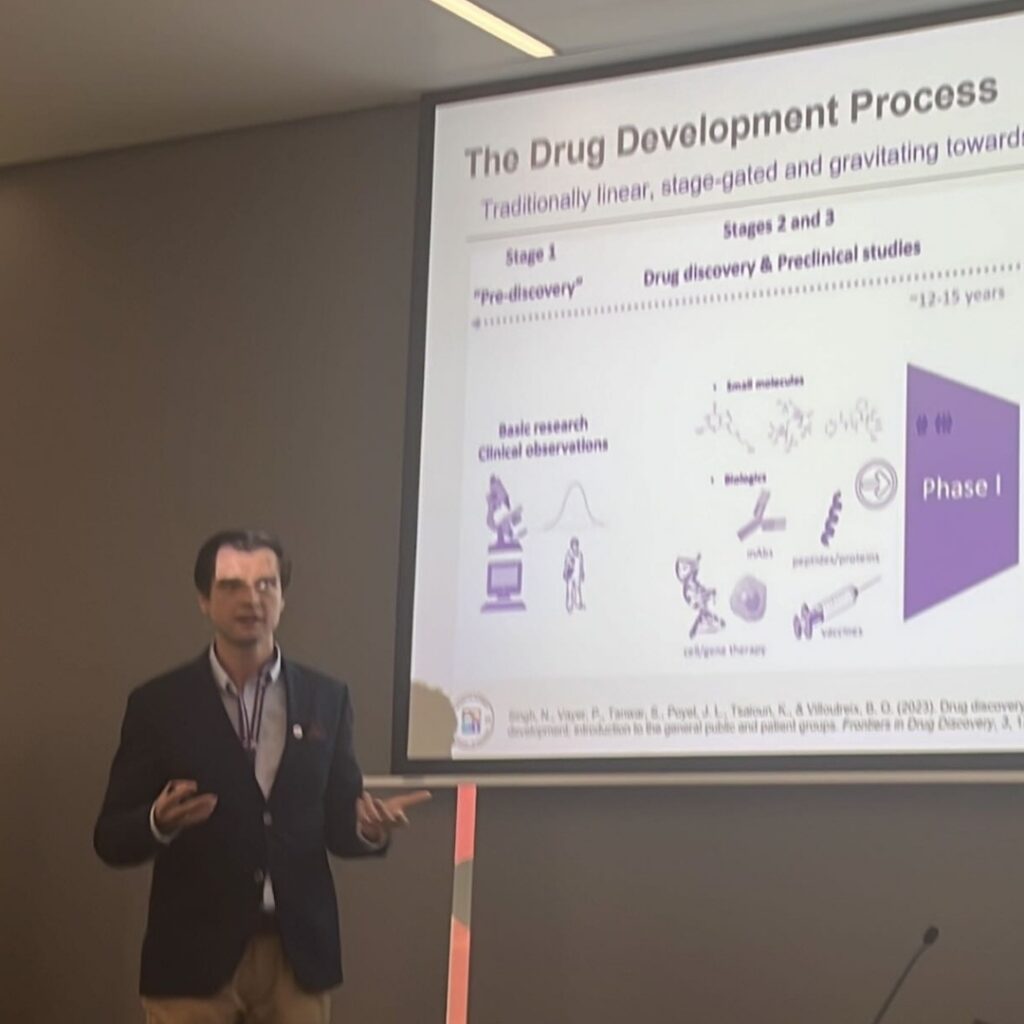
    3. Pharma & biotech delivery (my notes inspired by the Master track)
      • Hybrid: agile for exploratory work; classic for regulatory submissions.
      • AI: signal detection, trial analytics, scenario modelling.

    Kamil Mroz presented the realities of highly regulated environments where hybrid is essential.

    How to Thrive with AI: Mindset + Moves

    Mindset first: be curious and experiment, because AI is more than genAI and chat interfaces.

    Then move beyond:

    • Automate or replace repetitive team tasks like meeting minutes, document creation, status reporting and summarization.
    • Prefer specialized PM tools with embedded AI and keep an eye on agentic AI.
    • Don’t stall at POC, but define value hypotheses, metrics, and scale what works.
    • Stay agile and resilient, because this confidence in uncertainty is a competitive edge.
    • Invest in human skills like empathy, ethics, integrity, curiosity, relationships and compassion.

    Where to start (a practical menu):

    • Everyday AI: minutes, documentation, status, summaries.
    • Scope & change: impact analysis; generate options, scenarios, solution ideas.
    • (Re)prioritization: backlog triage with criteria you trust.
    • Scheduling & resources: optimize with large data sets (knowledge graphs); incorporate sentiment signals (e.g., morale risks) into plans.
    • Risk: use AI as sparring partner for risk identification, what‑ifs, and stakeholder simulations.

    Entrepreneurship x Project Management

    One session I especially appreciated was Pat Lucey’s Innovate, Execute, Lead – Bridging Entrepreneurship and Project Management. He traced the journey from project manager to entrepreneur and mapped the overlapping traits, toolkits, and disciplines needed to scale impact. Surprisingly, the skills overlap whether you’re launching a startup or managing a complex project.

    My distilled takeaways from the entrepreneurship lens:

    • Same core skills: prioritization, risk, stakeholder value, disciplined execution.
    • Startup truths: you’ll lack control, others will have great ideas, you’ll learn (often via failure) and you can still pursue purpose and create value for people, profit, and planet.
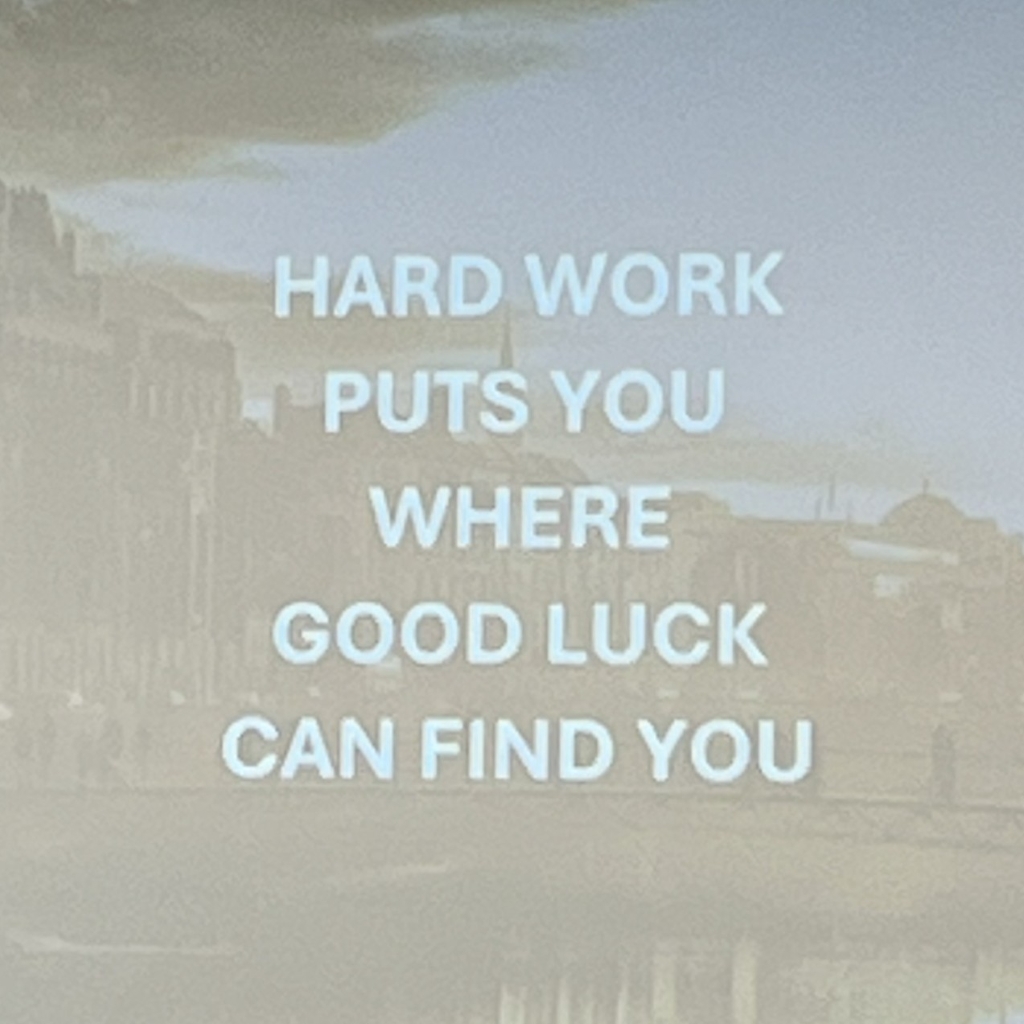
    • Luck matters, but “hard work puts you where luck can find you.”
    • Advice that sticks:
      • Be a giver: in networking and collaboration. Ask “What can I do for you?”.
      • Be authentic (think trust equation).
      • Be resilient: express confidence, optimism, and service to others.
      • Build complementary teams: “if you want to go fast, go alone. If you want to go far, go together.”
      • Build a network: “your network = your net worth.”
      • Build a risk culture: as an entrepreneur embrace risk; as a PM manage it.
    • Skills to succeed now: AI, hybrid delivery, social impact, transformation, and human ‘power skills’.

    These lessons echo PMI’s emphasis on maximizing project success and scaling with principles you can apply in ventures and projects.

    The Human Side of the Future

    A recurring motif across the day: speed of change is increasing. You could say that a tidal wave is coming. Whether this is threat or opportunity depends on your mindset. Technology is not the driver, but human need and behaviour are. As we scale new S-curves, organizations that put people at the center will adapt fastest and survive.

    Design principles I noted:

    • Self‑organizing ecosystems: Think about an orchestra that has autonomy with alignment.
    • Focus on flexibility & fluidity, inspiration & learning, exploration & curiosity, purpose & meaning.
    • Aim for flow (for people, teams, organizations) as the opposite of stress.

    We’re at a tipping point, so now is the time to double down on human skills.

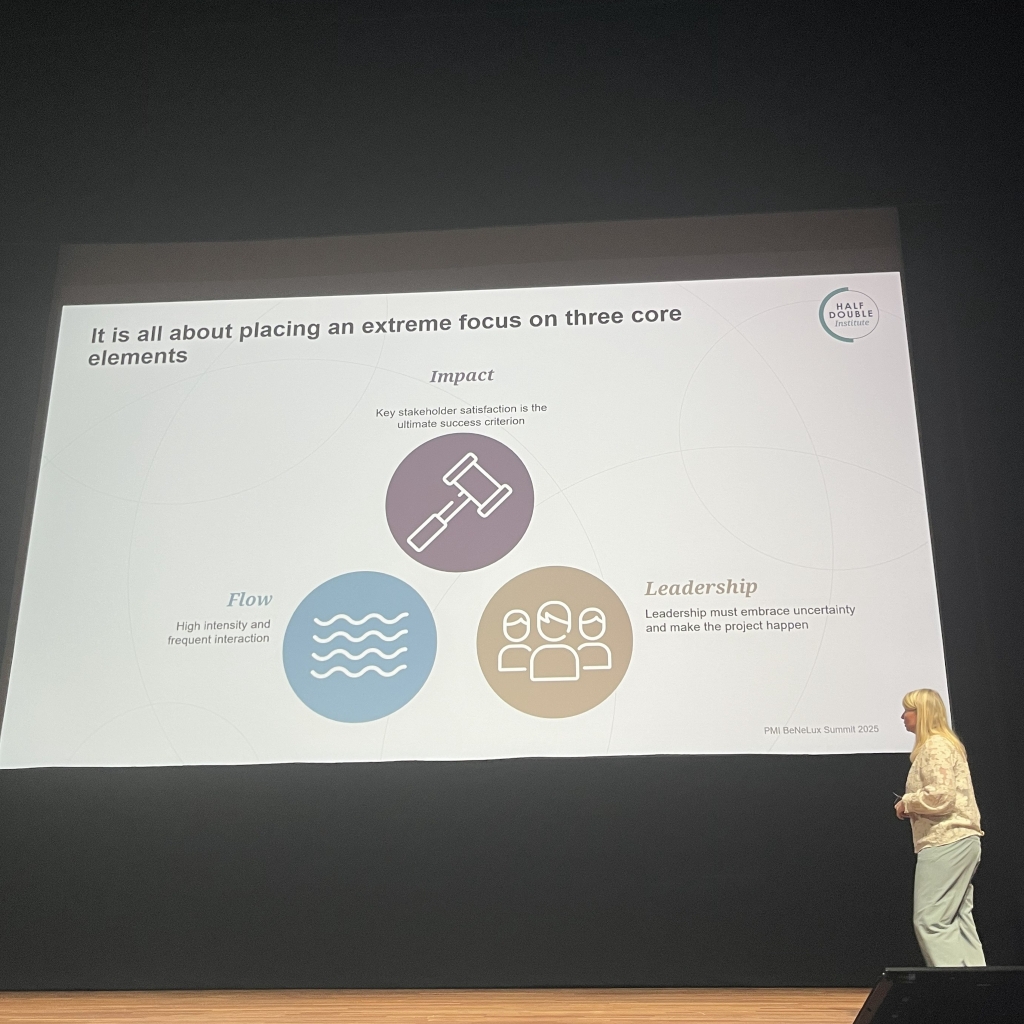
    Project Management: From Processes to Principles & Leadership

    Common sense isn’t common, so make it explicit:

    • Impact: outcomes over outputs.
    • Leadership: set priorities and focus.
    • Flow: high intensity, frequent interaction.

    The PM profession continues to shift from process‑based to principle‑based—and in the AI era that means evolving from project management to project leadership, centered on purpose, culture, and ethics.

    Speaker Highlights

    • Bart BriersThe Future is Hybrid: a context-driven, people-first stance on blending classic and agile.
    • Christian Kromme – futurist perspective on AI’s trajectory, with a human-centered “stay human” imperative.
    • Christina Sejr Pedersen – AI with people: leadership, empathy, adaptability alongside AI-driven efficiency
    • Pat Lucey  – entrepreneurship and PM are siblings: innovate, execute, and lead with the same core capabilities.
    • Kamil Mroz – Insights to hybrid delivery in regulated settings.

    Bringing It to the Classroom

    For my lecture Odisee, I’ll translate these insights into hands-on learning:

    • Hybrid fundamentals: A solid basis of classic project management methodology to combine and tailor it with agile for a hybrid approach.
    • Everyday AI in PM: Practical advice for project managers.

    Principles over processes: Leadership behaviors that unlock impact and flow.

    Closing Thoughts

    The future of our profession is hybrid, AI‑driven and human‑led. I left Maastricht energized and ready to keep the conversation going in the classroom and with peers across the industry.

    References

  • AI is not just technology

    AI is not just technology

    Reflecting on CIOforum Belgian Business on AI, I am inspired by the depth of discussions and the breadth of ideas. It’s clear that AI is not just a technology: it’s transforming the way we think, operate, and innovate.

    Here are some takeaways that resonate with me:

    💡 Data is the foundation: The emphasis on FAIR principles (Findable, Accessible, Interoperable, and Reusable) and clean data is undeniable. Imagine the possibilities with data orchestration acting as the conductor of a complex symphony, harmonizing streams from multiple sources, automating workflows, and delivering actionable insights to the right place at the right time. It’s enabling smarter, faster decisions.

    💡 Measuring AI’s impact beyond ROI: While ROI remains a critical metric, the concept of ROE (Return on Employee) is equally vital. It is a metric that measures the value generated by each employee and evaluates how effectively a company utilizes its human resources to achieve business outcomes. Think of it as measuring the human-centered value AI brings to the table.

    💡 Agentic AI is the third wave of the AI revolution: Next up are physical agents (think about all the mind-blowing videos of humanoid robots that are filling our timelines) and as the fifth and final wave, AGI (Artificial General Intelligence). To succeed in the current wave of AI agents, it is key to get agent orchestration and governance in order. Achieving complex goals efficiently and intelligently needs coordinated management of these agents. Coordinating multiple agent interactions ensures efficiency and intelligent goal achievement.

    💡 The timeless IT paradigms endure: Amidst the AI revolution, the principles of people first, process second, and technology last still hold . AI can be a gamechanger, but without strong change management and end-to-end business process optimization, it risks becoming mere automation on steroids.

  • End-to-End Automation

    End-to-End Automation

    On the CIO Forum in September 2021 I had the opportunity to present about End-to-End automation at Galapagos.

    Key take-away’s

    • Build with a vision: End-to-End, integrated and focused on business value.
    • It is about People & Process first. Technology is the enabler.
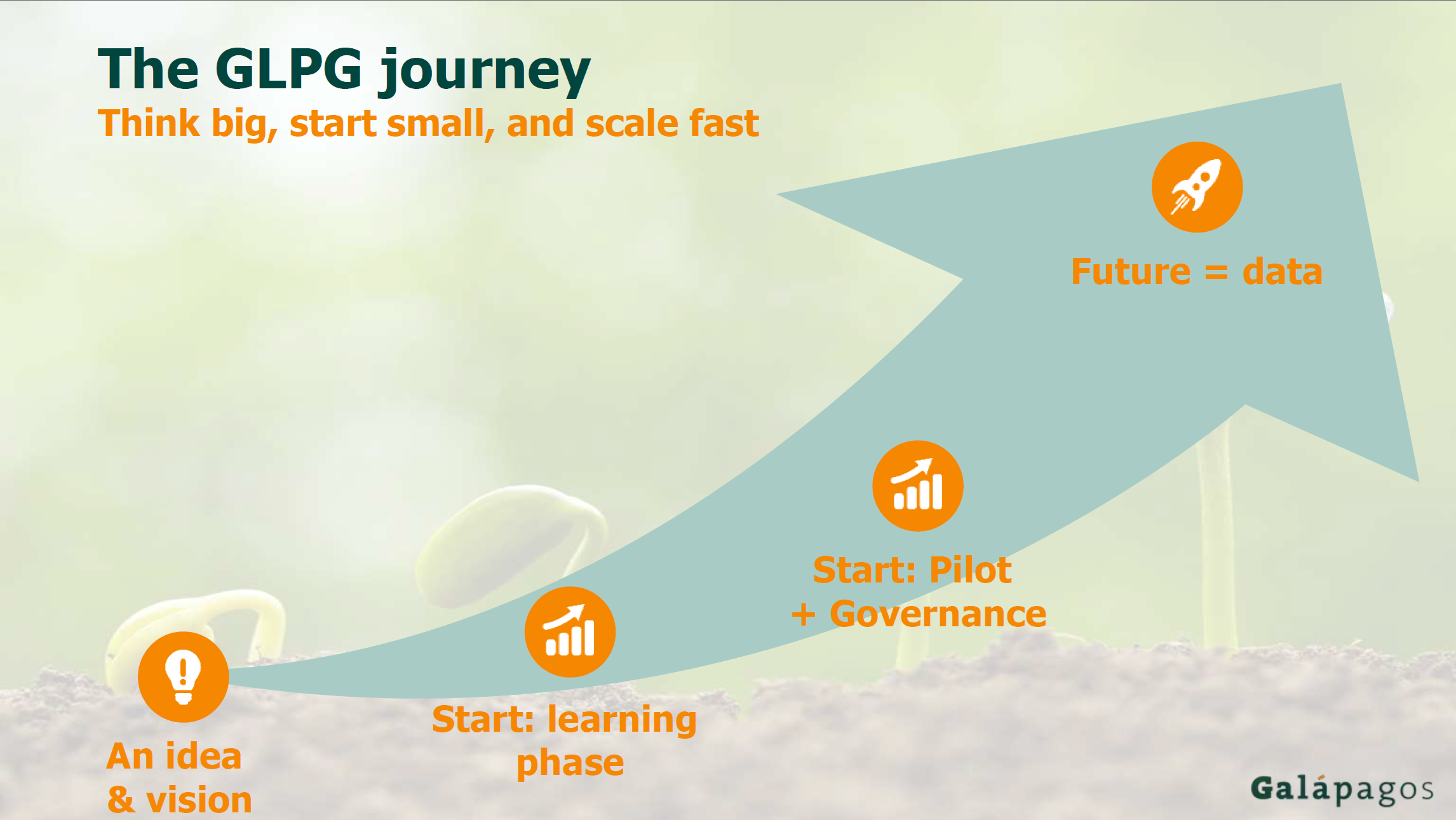
    • Think big, start small, and scale fast: Make it happen (show the value in pilot) & set up the governance (accelerate towards the future).
    • You need to break the ceilings, in order to accelerate digital and become data-drive.

    “The Galapagos organization has learned to deliver faster & more efficient with People & Process and the ITS organisation as key enabler”

    “Data, automation & innovation are cornerstones to take smarter decisions & make it happen.”

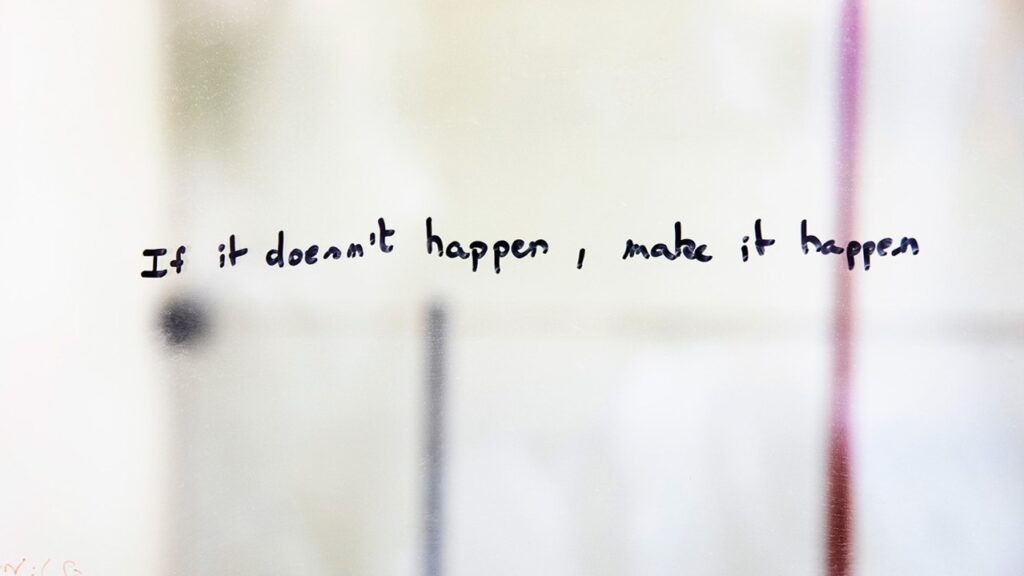
    If it doesn't happen, make it happen